This RIS/PACS integration case study explores how a public hospital in Greece successfully transitioned from manual, paper-based imaging workflows to a fully digital, integrated radiology ecosystem using Evorad’s RIS and PACS solutions.
Within just five working days, the hospital eliminated paper requests, removed CD/DVD-based image distribution, and implemented a seamless end-to-end digital workflow integrated with its Hospital Information System (HIS)
The Challenge: Inefficient, Fragmented Imaging Workflows
Before implementation, the hospital relied heavily on manual processes that slowed down operations and increased the risk of errors:
- Paper-based exam requests and manual data entry
- Time-consuming search for imaging results
- No real-time visibility into exam status
- Disconnected systems between HIS and radiology
- Risk of system failure due to storage limitations
These inefficiencies created operational bottlenecks, reduced productivity, and impacted patient care delivery It is a textbook example of fragmentation in radiology workflow.
The Solution: End-to-End Digital Imaging Integration
Evorad deployed a fully integrated solution combining:
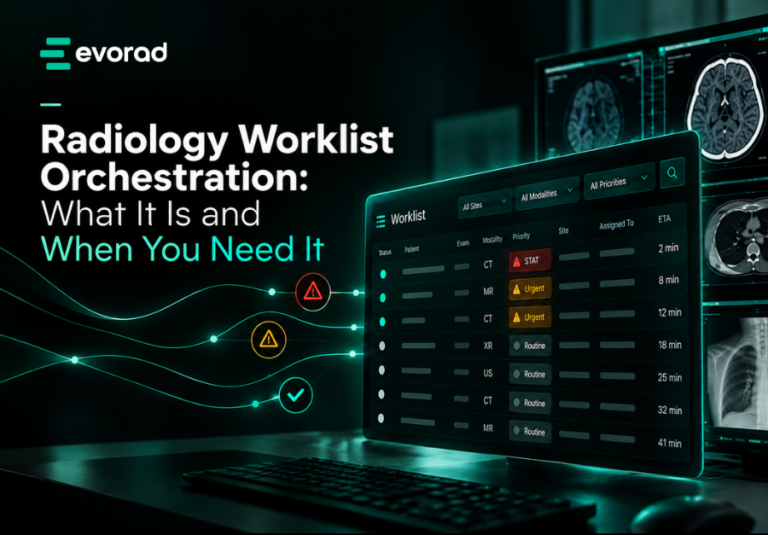
- RIS (Radiology Information System) for scheduling and workflow management
- PACS (Picture Archiving and Communication System) for image storage and retrieval
- Unified viewer (evoViewer) for diagnostics and reporting
- 24/7 monitoring and support to ensure system reliability
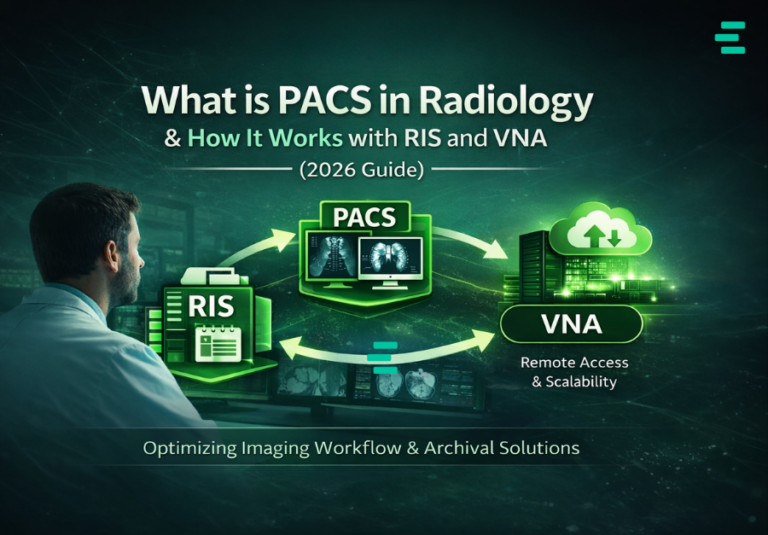
The integration enabled seamless data flow from exam ordering to result delivery, eliminating manual processes and ensuring full interoperability with the hospital’s HIS This follows the IHE Scheduled Workflow profile, using DICOM Modality Worklist and HL7 messaging between systems. For the basics, see what PACS is in radiology and how it works with RIS and VNA and DICOM vs HL7 vs FHIR.
How the Digital Workflow Works
The new system introduced a streamlined imaging workflow:
- Physicians create digital orders directly in the HIS
- Patient data flows automatically into RIS
- Imaging studies are captured and stored in PACS
- Radiologists review images using a diagnostic viewer
- Reports are delivered digitally via national health systems
- Continuous monitoring ensures uninterrupted performance
This fully automated workflow removed inefficiencies and enabled faster, more reliable care delivery
Results: Measurable Operational and Financial Impact
Within the first month, the hospital achieved:
- 90% digital delivery of imaging results
- 80% workflow optimization improvement
- Full staff adoption within one week
- €35,000 – €45,000 annual cost savings
Administrative workload was significantly reduced, while physicians gained instant access to imaging results, improving clinical decision-making and patient experience
Key Benefits of RIS/PACS Integration
- Elimination of paper and physical media (CD/DVD)
- Faster diagnosis and reporting turnaround
- Improved data accuracy and reduced human error
- Real-time visibility into imaging workflows
- Scalable infrastructure with proactive monitoring
Why This Matters for Healthcare Providers
Healthcare organizations worldwide are under pressure to digitize operations, reduce costs, and improve patient outcomes. This case study demonstrates how rapid deployment of RIS/PACS technology can deliver immediate ROI and long-term operational efficiency.
Ready to modernize your imaging workflows?
Discover how Evorad can help your healthcare facility achieve full digital transformation with seamless RIS/PACS integration.
Lessons for other hospitals planning RIS/PACS integration
Every hospital starts from a different point, but a few principles apply to most RIS/PACS integration projects:
- Map the current workflow first. Document how requests, scheduling, acquisition, reporting and result delivery work today, including the manual workarounds staff rely on.
- Agree on identifiers early. Consistent patient and exam identifiers between the HIS, RIS and modalities prevent mismatched studies from day one.
- Use Modality Worklist everywhere it is supported. Pulling patient details from the RIS removes manual typing at the scanner, one of the most common sources of errors.
- Train by role, not by system. Short sessions for physicians, technologists, radiologists and administrators, focused on what each group does day to day, speed up adoption.
- Measure before and after. Track turnaround time, film and printing use, and the time spent on administration so the benefits are visible to management and clinicians.
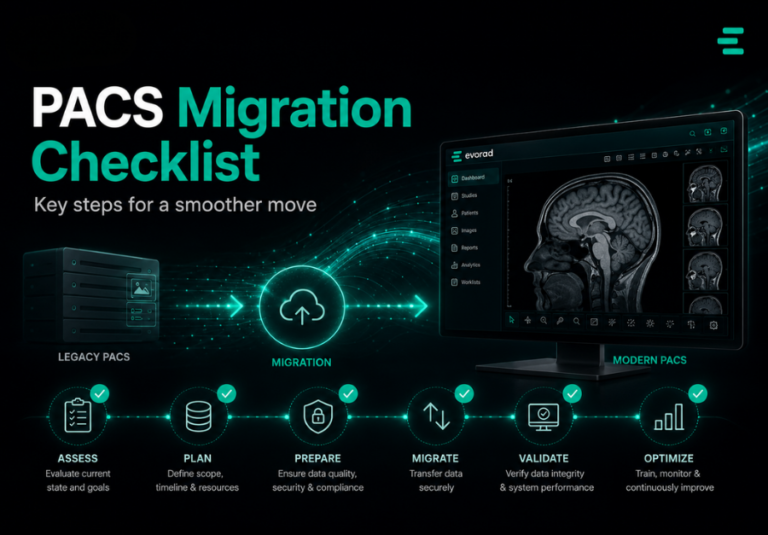
- Plan for the archive, not just go-live. Decide early how historical images and reports will be migrated or accessed, and choose a standards-based archive so that future system changes do not require another disruptive migration.
Approached this way, a RIS/PACS integration is less an IT installation and more a redesign of how imaging work moves through the hospital, which is where most of the measurable gains come from.
Related guides