ogy shortageIn short: The radiologist shortage is structural: imaging demand is growing faster than the workforce, and training takes more than a decade. Teleradiology does not create radiologists, but it changes which radiologists a study can reach. That closes three gaps recruitment cannot: geographic, subspecialty and out-of-hours coverage, provided the workflow underneath is sound.
There is a version of the radiologist shortage conversation that goes nowhere. It runs: demand is up, staffing is short, we should train more radiologists. All three statements are true. The third is also insufficient, because a consultant radiologist takes well over a decade to produce from medical school entry, and the gap is widening faster than that pipeline can close it.
The useful question is different. Given a fixed number of radiologists in a region, a number that will not meaningfully change this decade, how do you maximise the diagnostic capacity they can deliver? That question has an answer, and it is largely architectural. If you are new to remote reading, start with our guide to
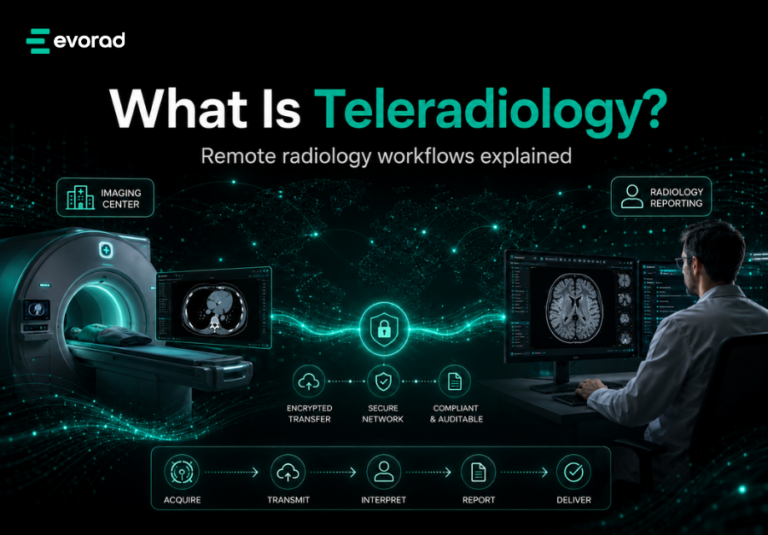
what teleradiology is and how it works.
How big is the radiologist shortage?
The
Royal College of Radiologists’ 2025 clinical radiology workforce census puts the UK consultant shortfall at 32%, forecast to reach 40% by 2030 if current trends continue. The UK needs an additional 2,313 whole-time-equivalent clinical radiologists, and spending on outsourcing, insourcing and locums reached £362 million in 2025, more than twice the 2021 figure.
The dynamic underneath those numbers matters most: the consultant workforce grew 4.3% in a year while complex imaging demand grew 9%. Growth on both sides, divergence in the middle. Europe shows the same pattern, with demand rising faster than headcount and a large share of radiologists approaching retirement inside the same window. We cover the European picture in
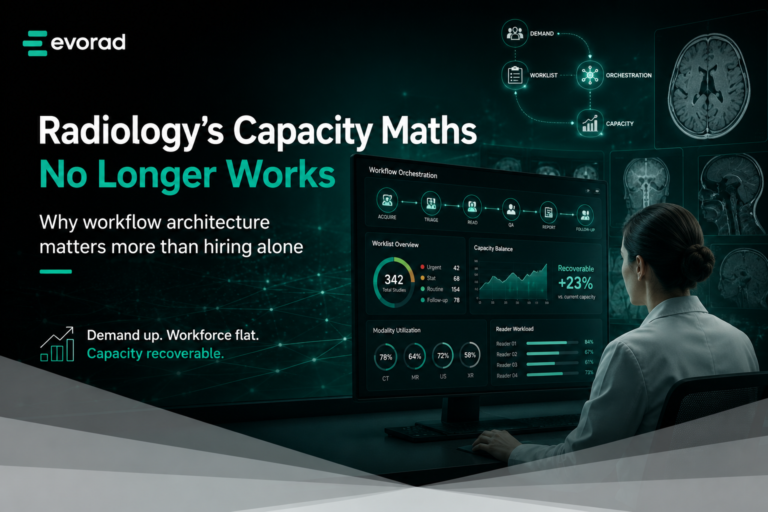
Europe’s radiology capacity maths no longer works.
A gap that compounds every year cannot be closed by a supply response that takes a decade to arrive.
Why the radiologist shortage is not evenly distributed
Aggregate shortfall figures hide the operationally significant fact: the shortage is unevenly distributed, and the unevenness is what actually causes harm.
Geographic concentration
Radiologists cluster around teaching hospitals and metropolitan centres. Peripheral and district hospitals and rural imaging centres compete for what is left. A regional hospital may be unable to recruit a single additional consultant while a metropolitan centre 90 minutes away has depth in the same subspecialty.
Subspecialty scarcity
Imaging has subspecialised faster than departments can staff for it. Paediatric neuroradiology, cardiac MR, breast MRI and advanced musculoskeletal interpretation each need dedicated fellowship training. A district hospital cannot employ a complete subspecialty team at any realistic volume, so the same study can receive materially different interpretation depending on where the patient presents.
Out-of-hours gaps
Nights, weekends and holidays concentrate risk. Emergency imaging volume does not fall when staffing does, and on-call rotas covering these windows are a well-documented driver of burnout: a
systematic review in the European Journal of Radiology Open found burnout prevalence among radiologists ranging from 33% to 88% across studies. Our article on
teleradiology in emergency care looks at what this means for time to read.
How teleradiology closes gaps that recruitment cannot
Teleradiology does not create radiologists. It changes which radiologists a given study can reach, and that addresses all three forms of unevenness.
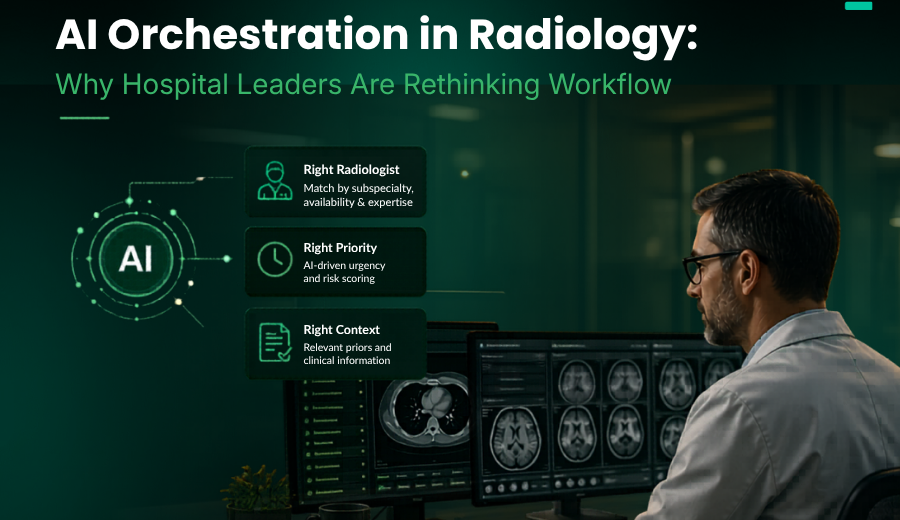
Geography becomes routing. When any credentialed radiologist on the network can read a study, the constraint stops being “who works at this hospital” and becomes “who is qualified and available right now”. A peripheral site gains the same depth as the metropolitan centre, without anyone relocating. This is the largest equity gain available in imaging today, and it needs no new workforce.
Subspecialty becomes a network property. Ten hospitals cannot each employ a paediatric neuroradiologist. They can share two, provided routing logic identifies which studies need that expertise and balances it against availability so cases do not stall waiting for a specialist who is off shift.
Published work on subspecialised reporting has shown improvements in turnaround when studies are matched to appropriately qualified readers.
Out-of-hours coverage becomes shared. Distributed rotas across a wider pool reduce the on-call burden on any individual, which helps retention as well as coverage. With 41% of UK consultants now working less than full time, flexible remote arrangements are not a perk; they keep experienced radiologists in the workforce. Our article on
the structural limits of 24/7 coverage explores this further.
4 conditions for teleradiology to work
Distribution multiplies capacity only when the underlying workflow is sound. Where it is not, teleradiology adds coordination overhead to an existing problem. Four conditions are non-negotiable.
- Unified access. One authenticated interface across all sites. A radiologist covering six hospitals through six separate viewers loses the capacity gain to context switching. See how to end the multi-login workflow and why VPN-based teleradiology slows radiologists down.
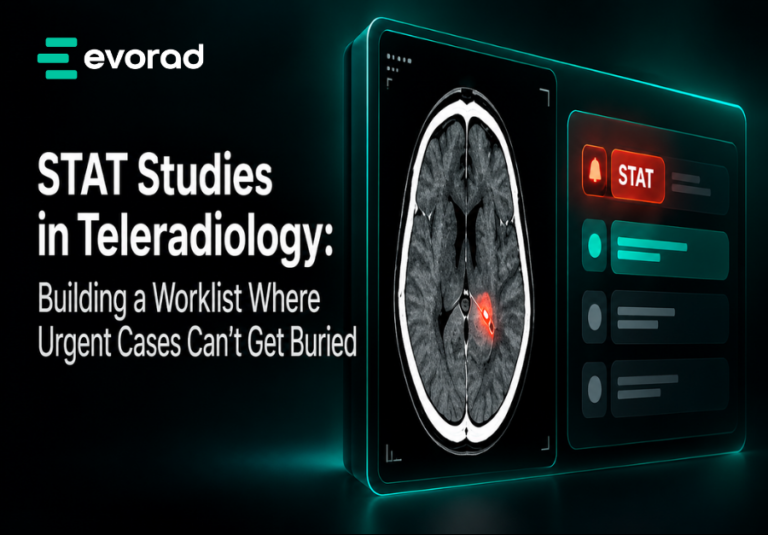
- Automated allocation. Manual triage does not scale across a network. Routing must weigh urgency, SLA clock, subspecialty, credentialing and availability, which is what radiology workflow orchestration does. Urgent cases need their own rules, covered in STAT prioritisation in teleradiology.
- Reliable priors. A remote reader without priors is a less capable reader. Cross-facility prior aggregation is a prerequisite, not an extra.
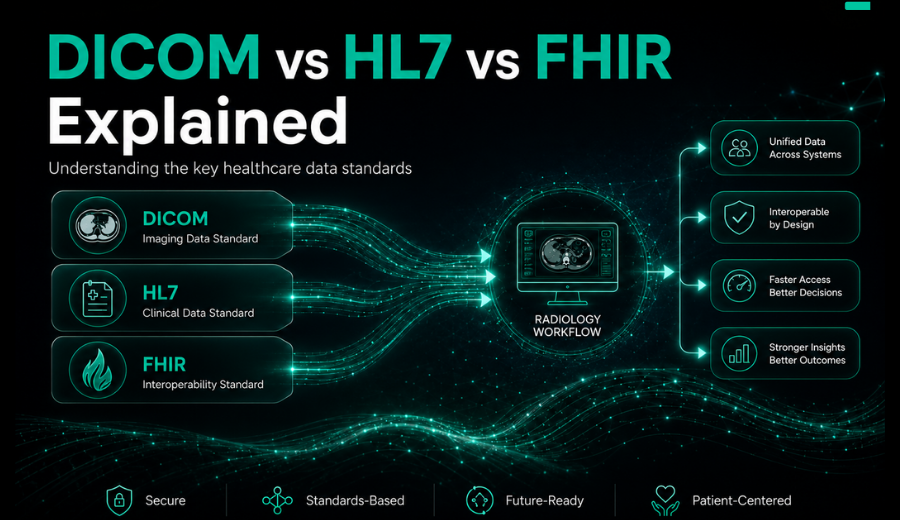
- Identity discipline at source. An enforced DICOM modality worklist and consistent accession handling. A remote radiologist cannot fix a demographic mismatch made at the scanner console.
What organisations get wrong
Treating teleradiology as procurement rather than workflow redesign. Signing a contract for remote reads without addressing routing, prior access or identity discipline produces a service that underperforms, and a conclusion that “teleradiology does not work for us”. The
teleradiology workflow from order to report has to be designed end to end.
Accumulating platforms. Each new client or acquired site arrives with its own system, and the network becomes a set of separate reading environments rather than one. Radiologists end up holding active credentials on five or more platforms, which is inefficient, error-prone and a security exposure.
Using cover as a substitute for establishment planning. Remote cover fills a rota gap quickly, which makes it easy to defer the harder question of what the substantive establishment should be. Review at least annually which work is distributed because distribution is the better answer, and which because a post has not been filled. The two need different responses, as our guide to
radiology capacity planning explains.
The equity argument
Delayed reporting is not a neutral operational metric. Longer waits for a report can delay treatment decisions and extend hospital stays. When a patient at a peripheral hospital waits materially longer for an interpretation than a patient at a teaching hospital, for the same study and the same clinical question, that gap is created by infrastructure, not by clinical necessity. Distributing reading capacity through teleradiology is one of the few interventions that narrows it without needing a workforce that does not exist. Our guide to
radiology turnaround time SLAs covers how to measure it.
Where evoTelerad fits
evoTelerad teleradiology software is designed for networks that need a finite radiology workforce to reach further. Studies route to appropriately qualified radiologists by modality, body part and clinical context, balanced against availability. Every worklist, site and case source is available through one zero-footprint browser interface with no client software or VPN. SLA-aware prioritisation means peripheral-site studies are not pushed down by default, relevant priors surface regardless of originating facility, and a multi-tenant architecture supports distinct SLAs and credentialing rules per client.
For organisations that want to keep their current PACS,
maestro radiology workflow orchestration adds the same routing logic on top of existing systems. Reading groups can also explore our page for
teleradiology groups.
Book a demo to see how evoTelerad extends the reach of the radiologists you already have
Related guides
Frequently asked questions
Why is there a radiologist shortage?
Imaging demand, especially CT and MRI, is growing faster than the radiologist workforce, training takes more than a decade, and a growing share of radiologists work less than full time or are nearing retirement.
Can teleradiology solve the radiologist shortage?
Not on its own, because it does not add radiologists. It makes the existing workforce reach further by routing studies to qualified, available readers across sites, which closes geographic, subspecialty and out-of-hours gaps.
What does a teleradiology network need to work well?
Unified access through one interface, automated case allocation, reliable cross-facility priors and identity discipline at the scanner.
Conclusion
The radiologist shortage will not be solved this decade. It can be substantially reduced by making sure every study in a region can reach every appropriately qualified radiologist in that region, quickly and without friction. That is an architecture problem, and architecture problems are solvable on a timescale that matters. Organisations that treat teleradiology as a platform decision rather than a staffing workaround are the ones closing the gap now.
Sources